
I am not working this year. Not that I have retired, the official reason is that I have taken “leave of absence” from the law and in theory will return to the law at the end of the year. Whether I will or not remains an open question, for I am very tired now.
I took the leave to care for my son. He is gravely ill. A year ago we were striding across Edinburgh and Rome and the world, he was fit and happy and funny and a joy. Now he is frail and getting frailer. He looks like a survivor from a concentration camp, except he will not survive. He is in a wheelchair and must be lifted from the wheelchair into and out of bed, onto and off the commode, his legs are lifeless and his energy, all gone.
I don’t care for him on my own. It is shared, with my wife. In his Dublin flat. I will stay for three or four days and then Patricia will take over for the next few days. And so it goes on, relentlessly, week after week after week. And we are both exhausted. Physically from the lifting, emotionally from the tragedy.
After my turn, I hesitate to call it my shift, for that word is too mechanical, too cold, after my turn, I go home. To our house in Kildare where we keep all our treasures from our years together, the books, the paintings, the music. We are never there together now and it is just a place to crash out, exhausted, to recover for a few days in the empty house before returning to my son in the Dublin Flat.
I travel home on the bus, Dublin to Naas, a large comfortable warm bus. But I am zonked out and hardly notice it rushing south down the motorway towards home. At Naas I must take a taxi, for our home is deep in county and there is no public transport to the wilds of rural Kildare
It is dark. There is one cab on the rank by the post office in Naas and I slump into the front seat. It is one of those hybrid cars, the engine is hardly audible, it purrs. The driver is a black man and he seeks, as taxi drivers do, to make small conversation with his fare. I am too tired to talk, I want only to lie down in a dark room and recover. I need to recover for my son. For my son.
He is from Nigeria, the black man. He has a very beautiful wife he tells me. And children.
“Do you have children sir” he asks and were they home for Christmas with you?”
The African English comes out sounding blunt, the sentences are stilted
I am looking out of the window into the dark as we leave the lights of Naas and rush into the unlit country roads. I don’t want to talk.
“My son” I said, there were tears, I was talking to the window, “my son was not well enough to come home this year”
There is a silence, only the purring of the quiet engine, the darkness rushing past. A long silence. The small talk has run its course.
After a while he asks in his stetted English
“What is the matter with your son sir?”
I can hardly talk, hardly say it, I am still looking out the window and I am crying now, quietly, to myself.
“Can, cancer” I say and bite my lip and hold on to the seat belt across my chest, hold on for dear life.
There is another longer silence
“What is the name of your boy sir” he says
I am in bits now
“Gavan, his name is Gavan”
We drive on, in the darkness of the Kildare night, we are off the main road now moving down a narrow boreen, the headlights of the car throwing shadows onto the hedges and banks. It is very quiet and we turn into the driveway of my home where the hedges and trees form a long tunnel up to the yard. The meter shows a charge of twelve euros and I round it up, take out three five euro notes and hand them too him. I am still in my seatbelt
He takes my hand with the money, this black man, and holds it on the dashboard. It is dark, only the red and green lights from his dashboard. It is quiet.
“Sir” he says, “I want to pray with you for the life of your son Gavan”
And he lifts his head to the heavens and calls on God to come to this man’s house and save the life of Gavan, for Gavan, he tells his God is a child of the Lord as are we all, and you must come here”, he says, “to save the life of Gavan”
There is nothing I can say. I cannot speak. I release the seat belt and step out of the car I look at him and the tears are streaming down my face, but I cannot speak.
I am in the house now, the empty house, standing in the kitchen, in the dark. I am not a man of God. I have no faith but I am moved, terribly terribly moved. This total stranger, this man with the very beautiful wife, this black man who has chosen to live amongst the Irish has called on his god to save the life of my son
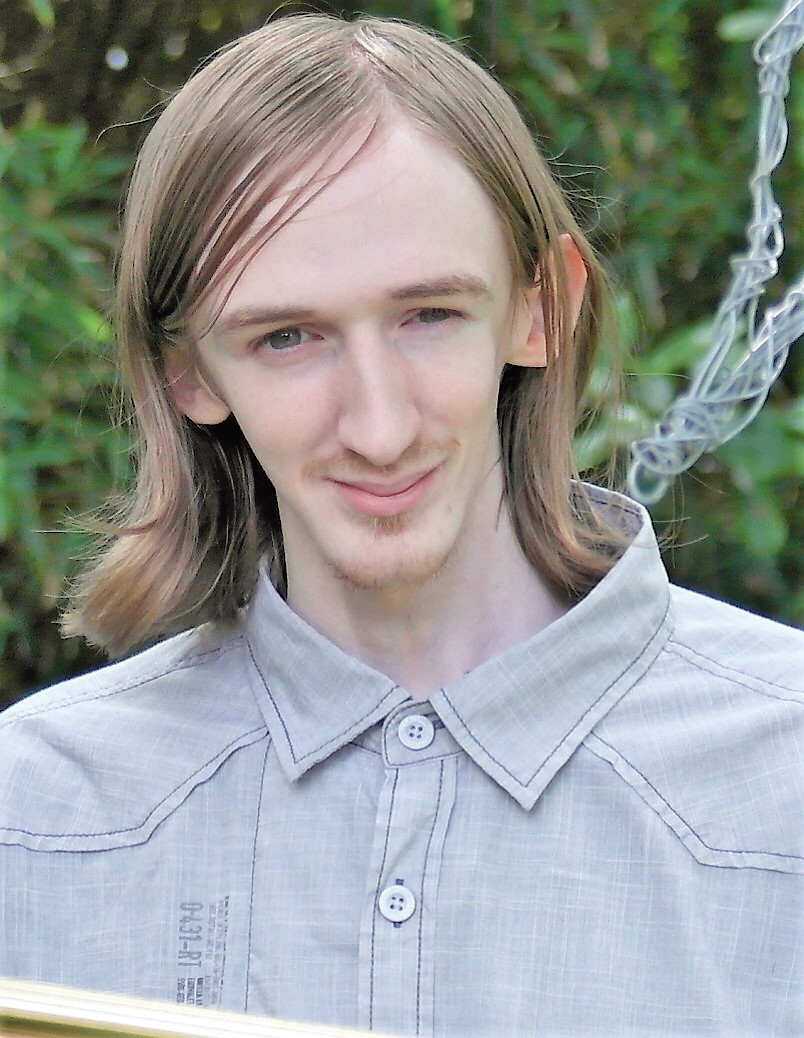
Gavan died on the 29th January 2018
 Broadsides - A collection of bits and pieces
John, I am so sorry to hear this. I can only wish that you, and your wife, someho find the strength to continue to care for your son with the obvious love and affection you have for him. Try to reserve a little for yourself, and for each other. I know that is easy to say, and very difficult to do. May he be as free from pain as possible and be enveloped in the love of Mum and Dad.
Manly hugs to you.
John, I can see and feel all that you evoke so beautifully and painfully in this gorgeously written piece. Such a tragedy and an irreplaceable loss. Gavan knew he was deeply loved and will always be missed.
Words…what words? I have none in reply because they are all inadequate. I am so sorry.
I’m sorry to hear that Gavan has passed away. I assumed that I would eventually get to meet my half brother but it was not to be. My thoughts are with you today.
This is the most moving piece I have ever read. It was beautiful, thoughtful and so very sad yet the way you described each and every interaction shows the pain of watching a loved one with this awful disease. My thoughts and love go to you and your family John.
Dear John, my thoughts are with you, albeit years later.
You cared for him beautifully, as any loving parents would.
Thank you for your lovely words about him xxx